Sunday, November 30, 2014

Reynolds Beal | Great Artist | Art | Famous

Hello Guys , 
Today we're going to Learn about the Great and Famous Reynolds Beal I hope it would be interesting and entertaining your day !
Thank you and there is lot of stuff coming soon so stay tuned to Toonstar6 and if you want any videos about art you can visit ouYouTube page!Check this out : https://www.youtube.com/user/toonstar6

Reynolds Beal (October 11, 1866 – December 18, 1951) was an American Impressionist and Modernist artist.[1]

The elder brother of painter Gifford Beal, Reynolds was born in New York City. He and his brother Gifford spent their summers at Wilellyn in Newburgh, New York, on the Hudson River, and together they would later design the gardens at Wilellyn. His father was William Reynolds Beal, whose brother Thaddeus owned Echo Lawn, not far away. Beal was a man of independent means, and was thus able to devote his life to his art without having always to appeal to the tastes of his patrons or to contemporary trends.

Beal showed artistic ability from an early age. He first studied at Cornell University (naval architecture), where he was a member of the Phi Kappa Psi Fraternity and the Irving Literary Society. Beal painted and sketched in and around Cayuga Lake. His home haunts of the East River were the first subjects of his work; in Sibley Hall’s drafting bays he learned further technique as a budding naval architect. Although the “Sibley time” constitutes his first artistic experience, it was not until the years following graduation that Beal became serious about a painting career.

Beal spent 1901 at sea, and worked up his sketchbook entitled Cruising Aboard U.S.S. School Ship St. Mary's (1901), he kept scrapbook pages of marine etchings and photographs, old Christmas cards, personal photographs, exhibition catalogs, and clippings.

From 1900 to 1907, he painted almost exclusively at the artist's community in Noank, Connecticut with Henry Ward Ranger. After 1912, Beal focused more on the Hudson Valley, where he painted the colorful and whimsical scenes of the traveling circuses that came through the region. His most prolific artistic period falls between the years 1910-1920.

Beal painted the beaches in Provincetown, Key West, Rockport, Atlantic City and Wellfleet, circus scenes and carnivals. He used a variety of styles including Impressionism and Tonalism. As he got older, his work became more complex and vibrant. In addition to oils, he was admired as a watercolorist, and he and Gifford made Rockport, Massachusetts their home. At one time, he resided in Gloucester, Massachusetts, as well. His studio overlooked Rockport's Inner Harbor, from where he drew and etched many harbor scenes.

Beal traveled widely. In November 1944, Reynolds and Gifford had a large joint exhibition at the Fitchburg Art Center (now Museum) in Fitchburg, MA, which included eighty-three oils, watercolors, and etchings that had been executed all over the world with subjects including Singapore, Trinidad, Samoa, China, Nassau, Egypt, Haiti, Cape Ann, Atlantic City, and Provincetown.

Beal was active in the art community. By 1934, he was a participant in the Salmagundi Club, Lotus Club, Century Club, National Academy of Design and the American Water Color Society. He was also a member of the Society of American Engravers and the National Arts Council[disambiguation needed]. His progressive tenets marked him as a "modernist", and he helped found the Society of Independent Artists and the New Society of Artists, which consisted of fifty of the most important painters of the day, including George Bellows, Childe Hassam, John Sloan, William Glackens and Maurice Prendergast.

Source : WikiPedia
 

Charles W. Bartlett | Great Artist | Art | Famous

Hello Guys , 
Today we're going to Learn about the Great and Famous Charles W. Bartlett  I hope it would be interesting and entertaining your day !
Thank you and there is lot of stuff coming soon so stay tuned to Toonstar6 and if you want any videos about art you can visit ouYouTube page!Check this out : https://www.youtube.com/user/toonstar6

Charles William Bartlett (1 June 1860 – 16 April 1940) was an English painter and printmaker who settled in Hawaii.

Bartlett studied metallurgy and worked in that field for several years. At age 23, he enrolled in the Royal Academy in London, where he studied painting and etching. After three years of study in London, he entered the private studio school Académie Julian in Paris, where he studied under Jules Joseph Lefebvre (1836–1911) and Gustave Boulanger (1824–1888).
In 1889, he returned to England and married Emily Tate, but shortly thereafter, his wife and infant son died in childbirth. Bartlett then traveled to Europe, spending several productive years in the Netherlands, Brittany and Venice with his friend and fellow artist Frank Brangwyn (1867–1956). Brangwyn is believed to have introduced Bartlett to Japanese prints. Bartlett produced some of his most important early works on the Continent, especially studies of peasants painted in broad areas of color. He was invited to join the Société Nationale des Beaux-Arts in France in 1897. In 1898, he returned to England and married Catherine "Kate" Main. Bartlett returned to the Continent with his second wife, and in 1908, he helped found the Société de la Peinture a l'Eau in Paris. Several Continental museums acquired his paintings at the Paris exhibitions of the Société de la Peinture a l'Eau.

Bartlett made several trips to Brittany and the Netherlands with the Dutch painter Nico Wilhelm Jungmann (1872–1935), which provided the former with material for future paintings of peasants, whose dignity derived from the simple placement of shapes.

In 1913, with financial backing from his wife's well-to-do family, the Bartletts traveled to the undivided Pre-Partition British India, Ceylon, Indonesia, China, and Japan. He arrived in Japan in 1915, where he met woodblock print publisher Watanabe Shōzaburō (1885–1962), who was a major force in early 20th-century Japanese art (shin-hanga). In 1916 Watanabe published 21 woodblocks from Bartlett’s designs, including six prints of Japanese landscapes. In 1917, Charles Bartlett and his second wife left Japan for England. However, they stopped off in Hawaii, where they remained—never returning to England. He did visit Japan in 1919, where he created sixteen shin-hanga prints for Watanabe Shōzaburō.

Anna Rice Cooke (1853–1934), who founded the Honolulu Museum of Art, became Bartlett’s advocate and patron. In 1928, Bartlett helped to found the Honolulu Printmakers along with local artists Alexander Samuel MacLeod, John Melville Kelly, and Huc-Mazelet Luquiens. Charles Bartlett died in Hawaii at the age of 79 on 16 April 1940.


Source : WikiPedia
 

Saturday, November 29, 2014

Richmond Barthe | Great Artist | Art | Famous

Hello Guys , 
Today we're going to Learn about the Great and Famous Richmond Barthe I hope it would be interesting and entertaining your day !
Thank you and there is lot of stuff coming soon so stay tuned to Toonstar6 and if you want any videos about art you can visit ouYouTube page!Check this out : https://www.youtube.com/user/toonstar6
 
James Richmond Barthe(January 28, 1901 – March 5, 1989) was an African-American sculptor known for his many public works, including the Toussaint L’Ouverture Monument in Port-au-Prince, Haiti, and a sculpture of Rose McClendon for Frank Lloyd Wright’s Fallingwater House.

Barthe once said: “...all my life I have been interested in trying to capture the spiritual quality I see and feel in people, and I feel that the human figure as God made it, is the best means of expressing this spirit in man.”

Richmond Barthé was born in Bay St. Louis, Mississippi (in January 1901). His father died at 22, when Richmond was only one month old, leaving his mother to raise him alone. Barthé spent his teen years in New Orleans, Louisiana.

His fourth-grade teacher and his parish priest influenced young Richmond’s aesthetic development, and he showed great promise as an artist at a young age, but as a Colored American in the South, he was barred from enrolling in any of the art schools in New Orleans, Louisiana, near his home. When he was twelve, his work was shown at the county fair in Mississippi, and he continued to develop remarkably as an artist.

At fourteen, Barthé left school to take a job as houseboy and handyman, but he still spent his free time drawing. At eighteen, after Barthé had moved to New Orleans, his parish priest in New Orleans and a writer for the New Orleans Times Picayune recognized his ability. Richmond donated a portrait he made for a church fund raiser. The priest and the writer, along with his employer determined to find an art school where Barthé could study and expand his talent.

Lyle Saxon of the Times Picayune newspaper, fighting against current racist school segregation, tried unsuccessfully to get Barthé registered in art school in New Orleans. In 1924, with the aid of a Catholic priest, the Reverend Harry Kane, S.S.I, and with less than a high school education and no formal training in art, Barthé was admitted to the Art Institute of Chicago. During the next four years Barthé followed a curriculum structured for majors in painting. During his four years of study he worked as a busboy at a small café. His work caught the attention of Dr. Charles Maceo Thompson, a patron of the arts and supporter of many talented young black artists. Barthé was a flattering portrait painter, and Dr. Thompson helped him to secure many lucrative commissions from the city’s affluent black citizens.

During his senior year he was introduced to sculpture by his anatomy teacher. He began modeling in clay to gain a better understanding of the third dimension in his painting. This transition proved to be, according to him, a turning point in his career. He exhibited two busts in the 1927 Negro in Art Week Exhibition and in the April 1928 annual exhibition of the Chicago Art League. He received much critical praise and numerous commissions following this.

Barthe's Haitian works came in a time after his 1947 move to Ocho Rios, Jamaica, and were among his largest and most famous works. The huge equestrian bronze of Dessalines was one of four heroic sculptures commissioned in 1948 by Haitian political leaders to mark independence celebrations. The Dessalines monument was part of a larger 1954 restoration of the Champs-du-Mars park in Port-au-Prince, Barthe's 40-foot-high L'Overture statue and stone monument was positioned nearer the National Palace, and was unveiled in 1950 with two other commissioned heroic sculptures (in the capital and in the north of the county) by Cuban sculptor Blanco Ramos. At the time, one African-American newspaper called the collection "the Greatest Negro Monuments on earth."  L'Overture was in fact a subject Barthe returned to several times, having created a bust (1926) and painted portrait (1929) of the figure early in his career.

Today Barthé's pieces are in the collections of the Whitney Museum of American Art, the Metropolitan Museum of Art, the Pennsylvania Museum of Art, and the Virginia Museum of Fine Arts, among others.

Richmond Barthé received many honors during his career, including the Rosenwald Fellowship and the Guggenheim Fellowship. In 1945, he was elected to the American Academy of Arts and Letters. He also received awards for interracial justice and honorary degrees from Xavier and St. Francis Universities. He was the recipient of the Audubon Artists Gold Medal in 1950.

Source : WikiPedia

Friday, November 28, 2014

Vincenzo Cabianca | Great Artist | Art | Famous

Hello Guys , 
Today we're going to Learn about the Great and Famous Vincenzo Cabianca I hope it would be interesting and entertaining your day !
Thank you and there is lot of stuff coming soon so stay tuned to Toonstar6 and if you want any videos about art you can visit ouYouTube page!Check this out : https://www.youtube.com/user/toonstar6

He was born in Verona. He began his artistic training at the Verona Academy, and then studied at the Venice Academy from 1845–47. During the 1850s Cabianca became acquainted with the artists, including Adriano Cecioni, Cristiano Banti, and Telemaco Signorini, who frequented the Caffè Michelangiolo in Florence, who would be known as the Macchiaioli.

He became a friend of Telemaco Signorini, and travelled with Signorini and Banti to Paris, his friend's influence led Cabianca to turn away from genre paintings towards a bolder realism, beginning in 1858. De Gubernatis terms the Macchiaioli enemies of all conventionalism and accurate researchers of effects, and describes Cabianca as principally interested in the effects of sunlight. Garollo in his Dizionario Biografico describes Cabianca as a painter of the "effects of the Sun".

Like the other Macchiaioli, he painted landscapes en plein air, but he was more reluctant than his friends were to abandon historical and literary subjects.

Among his works are La Mandriana and il Porcile al sole (1860). Returning from travels to Tuscany and Paris in 1864, he domiciled in Parma from 1864-1868, then moved to Rome. He also painted in watercolors, including La neve a Venice, Il fait sa cour, and Sulla marina di Viareggio.

Among his other works are Il bagno fra gli scogli; Sant'Angelo all' Isola di Giudecca; Reminiscenze del mare; Gondola bruna; La neve in Ciociaria; Le mura del convento; and Sotto il portico dei barattieri a Venice. At Naples in 1877, he exhibited Piccola via presso Perugia; La neve; Una casa ad Anacapri; and Reminiscenze d'Amalfi. At Rome in 1883 he displayed Rocca di Papa; Il caligo a Venice; Sul far del giorno; La pace del Chiostro; and Una sera sulla laguna.

Many of his paintings depict nuns; a well-known example is Le monachine (The nuns; 1861–62, Turin exhibition). The works of Cabianca's later years show the influence of the Symbolists and the Pre-Raphaelites. He died in Rome on March 21, 1902.

Collections holding works by Vincenzo Cabianca include the Galleria Nazionale d'Arte Moderna, Rome, and the Brooklyn Museum.

Source : WikiPedia
Vincenzo Cabianca (June 21, 1827 – March 21, 1902) was an Italian painter of the Macchiaioli group.

Thursday, November 27, 2014

Marie Bashkirtseff | Great Artist | Art | Famous

Hello Guys , 
Today we're going to Learn about the Great and Famous Marie Bashkirtseff  I hope it would be interesting and entertaining your day !
Thank you and there is lot of stuff coming soon so stay tuned to Toonstar6 and if you want any videos about art you can visit ouYouTube page!Check this out : https://www.youtube.com/user/toonstar6

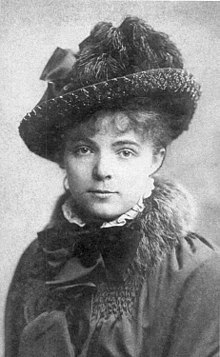
Born Maria Konstantinovna Bashkirtseva in Gavrontsi near Poltava, to a wealthy noble family, she grew up abroad, traveling with her mother across most of Europe. Educated privately, she studied painting in France at the Académie Julian, one of the few establishments that accepted female students, along with Anna Bilińska-Bohdanowiczowa. The Académie attracted young women from all over Europe and the United States. Another fellow student was Louise Breslau, whom Bashkirtseff viewed as her only rival. Bashkirtseff would go on to produce a remarkable body of work in her short lifetime; her best-known works are the portrait of Paris slum children titled The Meeting (1884; Musée d'Orsay, Paris) and In the Studio, (shown here) a portrait of her fellow artists at work. Unfortunately, a large number of Bashkirtseff's works were destroyed by the Nazis during World War II.

From the age of 13, Bashkirtseff kept a journal, and it is for this that she is most famous. Her personal account of the struggles of women artists is documented in her published journals, which are a revealing story of the bourgeoisie. Titled I Am the Most Interesting Book of All, her popular diary is still in print today. The diary was cited by an American contemporary, Mary MacLane, whose own shockingly confessional diary drew inspiration from Bashkirtseff's. Her letters, consisting of her correspondence with the writer Guy de Maupassant, were published in 1891.

As a painter, Bashkirtseff took her cue from Jules Bastien-Lepage's admiration for the true forms of reality, an inspiration found in nature.

    "I say nothing of the fields because Bastien-Lepage reigns over them as a sovereign; but the streets, however, have not yet had their... Bastien".
She formed a friendship with Bastien-Lepage; both artists succumbed to chronic illness prematurely in the same year, 1884.

Dying of tuberculosis at the age of 25, Bashkirtseff lived just long enough to become an intellectual powerhouse in Paris in the 1880s. A feminist, in 1881, using the nom de plume "Pauline Orrel," she wrote several articles for Hubertine Auclert's feminist newspaper, La Citoyenne. One of her famous quotes is: Let us love dogs, let us love only dogs! Men and cats are unworthy creatures.

She died in Paris, France and she is buried in Cimetière de Passy, Paris. Her monument is a full-sized artist studio that has been declared a historic monument by the government of France.
Marie Bashkirtseff (born Maria Konstantinovna Bashkirtseva; Russian was a Ukrainian diarist, painter and sculptor.

Source : WikiPedia

Georg Baselitz | Great Artist | Art | Famous

Hello Guys , 
Today we're going to Learn about the Great and Famous Georg Baselitz  I hope it would be interesting and entertaining your day !
Thank you and there is lot of stuff coming soon so stay tuned to Toonstar6 and if you want any videos about art you can visit ouYouTube page!Check this out : https://www.youtube.com/user/toonstar6


Georg Baselitz (born 23 January 1938) is a German painter. He studied in East Germany, before moving to what was then West Germany. Baselitz's style is interpreted by the Northern American critics[clarification needed] as Neo-Expressionist, but from a European perspective, it is more seen as postmodern.[citation needed]

His career was boosted in the 1960s after police took action against one of his paintings, (Die große Nacht im Eimer), because of its provocative, offending sexual nature.

He is currently a professor at the Berlin University of the Arts.

Baselitz was born 23 January 1938, as Hans-Georg Kern in Deutschbaselitz (now a part of Kamenz, Saxony), in what was later to be East Germany. His father was an elementary-school teacher and the family lived in the local schoolhouse. Baselitz first encountered art in albums of nineteenth-century pencil drawings in the school library. He also assisted nature photographer Helmut Drechsler on occasional ornithological shoots.

In his early life, his family moved to the county town of Kamenz. Baselitz attended the local school, in the assembly hall of which hangs a reproduction of the 1859 painting Wermsdorfer Wald by Louis-Ferdinand von Rayski, an artist whose grasp of realism was a formative influence.[1] He read the writings of Jakob Böhme. At the ages of 14 and 15, he painted portraits, religious subjects, still lifes and landscapes, some in a futuristic style. In 1955, he applied to study at the Kunstakademie in Dresden but was rejected. In 1956, he passed the entrance exam to study forestry at the Forstschule in Taranth and successfully applied to study at the Hochschule für bildende und angewandte Kunst in East Berlin. He studied painting under professors Walter Womacka and Herbert Behrens-Hangler, and befriended Peter Graf and Ralf Winkler (later known as A. R. Penck). After two semesters, he was expelled for "sociopolitical immaturity." The next year he successfully applied for a place at West Berlin's Hochschule der Künste and continued his studies in Professor Hann Trier's class, a creative environment largely dominated by the gestural abstraction of Tachism and Art Informel, affecting a certain orientation towards Paris amongst both staff and students. He immersed himself in the theories of Ernst Wilhelm Nay, Wassily Kandinsky and Kasimir Malevich. During this time he became friends with Eugen Schönebeck and Benjamin Katz. Andreas Franzke gives his primary artistic influences at this time as Jackson Pollock and Philip Guston. Conversely, he argues that Baselitz found the work of Barnett Newman inaccessible, as well as that of Mark Rothko.
2010-2013

From 21 November 2009, to 14 March 2010, the Museum Frieder Burda and Baden-Baden’s Staatliche Kunsthalle exhibited a comprehensive survey of the artist, featuring approximately 140 works. “Baselitz. A Retrospective” was also presented at the two neighbouring museums, with the Museum Frieder Burda displaying “50 years of painting”, the Staatliche Kunsthalle “30 years of sculpture”.

In a 2013 interview, Baselitz was quoted as saying, "women don’t paint very well. It’s a fact." Citing the comparative lack of commercial success of work by women artists in the most expensive markets as proof, he stated, "as always, the market is right. Women simply don't pass the test."

Baselitz's statements elicited rebuttals from art historians and critics, including Sarah Thornton, author of Seven Days in the Art World, who countered, "[t]he market gets it wrong all the time. To see the market as a mark of quality is going down a delusional path. I’m shocked Baselitz does. His work doesn't go for so much."

The record for a painting by Baselitz is £3.2 million, while the record for a painting by Yayoi Kusama, a female artist, is £3.8 million.
Style

In the 1970s, Baselitz was part of a group of Neo-Expressionist German artists, occasionally identified as “Neue Wilden,” focusing on deformation, the power of subject and the vibrancy of the colors. He became famous for his upside-down images. He is seen as a revolutionary painter as he draws the viewer’s attention to his works by making them think and sparking their interest. The subjects of the paintings don’t seem to be as significant as the work’s visual insight. Throughout his career, Baselitz has varied his style, ranging from layering substances to his style, since the 1990s, which focuses more on lucidity and smooth changes.

Source : WikiPedia